Climbing.
Learn · Craft

Knot overview

The key climbing knots — with preview and a link to the interactive animation on Knots 3D ↗. Play it step by step, rotate it, and tie along at your pace.

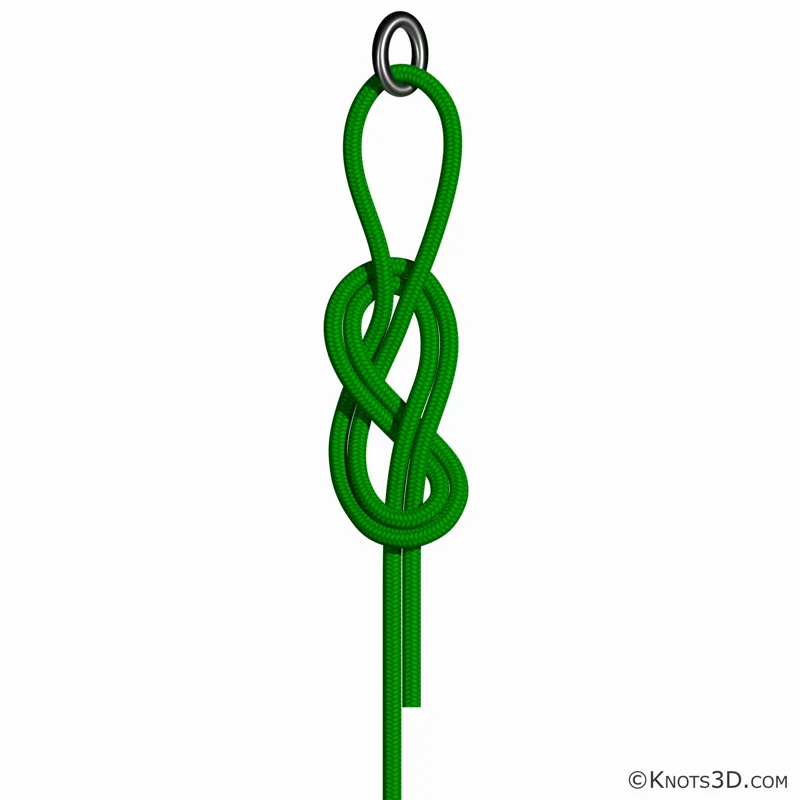
Figure-eight follow-through — preview from Knots 3D

Watch the Knots 3D animation ↗

Tie-in knots

Figure-eight follow-through

Standard tie-in knot at the harness

Use

  • Standard tie-in at the harness — recognised worldwide and often required in gyms.
  • Easy to check: the knot must look like a clean “8”.
  • Always have your partner check it after you tie in.

Tips

  • Dress the figure-eight before you tighten it — fewer corrections at the harness.
  • Leave at least a hand’s width of tail. An overhand backup is optional — required in some gyms.

Caution

  • A badly dressed figure-eight (tangled, twisted) loses a lot of strength.
  • Do not climb without a partner check.
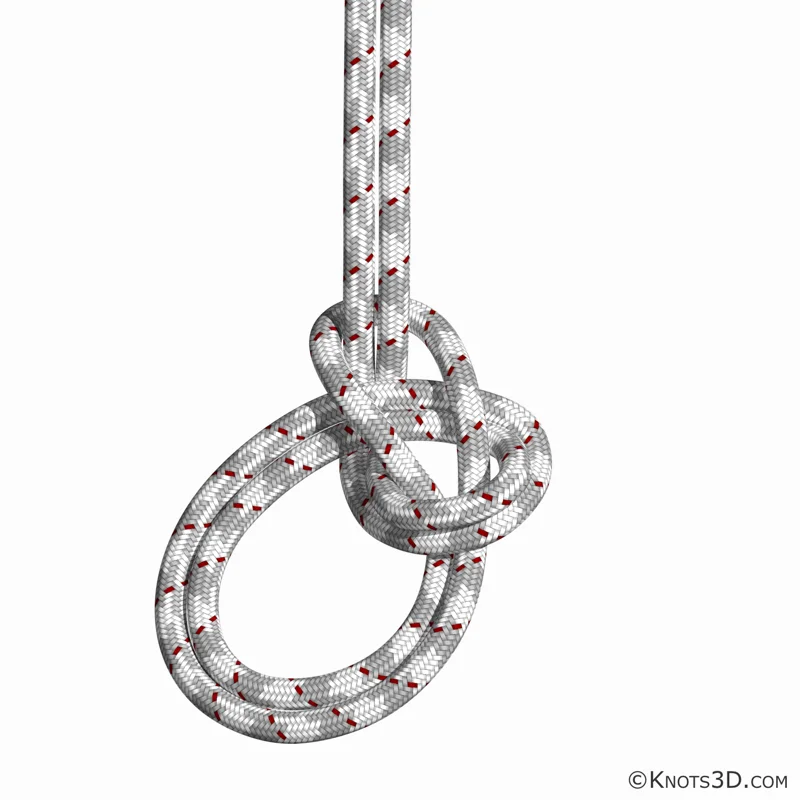
Double bowline — preview from Knots 3D

Watch the Knots 3D animation ↗

Tie-in knots

Double bowline

Bowline rewoven through the harness — alternative to the figure-eight

Use

  • Alternative to the figure-eight — often easier to untie after a fall.
  • Useful on long routes when you untie and retie more often.

Tips

  • Always finish with a Yosemite tie-off and overhand backup — a naked bowline at the harness is off limits.
  • Partner check: eye snug, tail correct, backup seated.

Caution

  • A bowline without Yosemite finish and backup can loosen under a standing load.
  • Some gyms allow only the figure-eight — ask first.
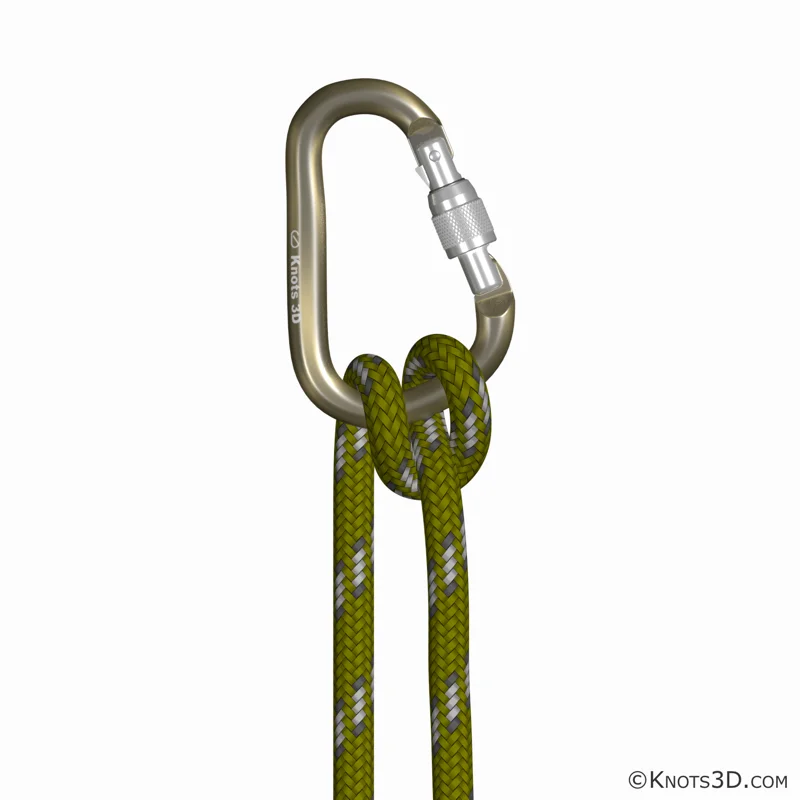
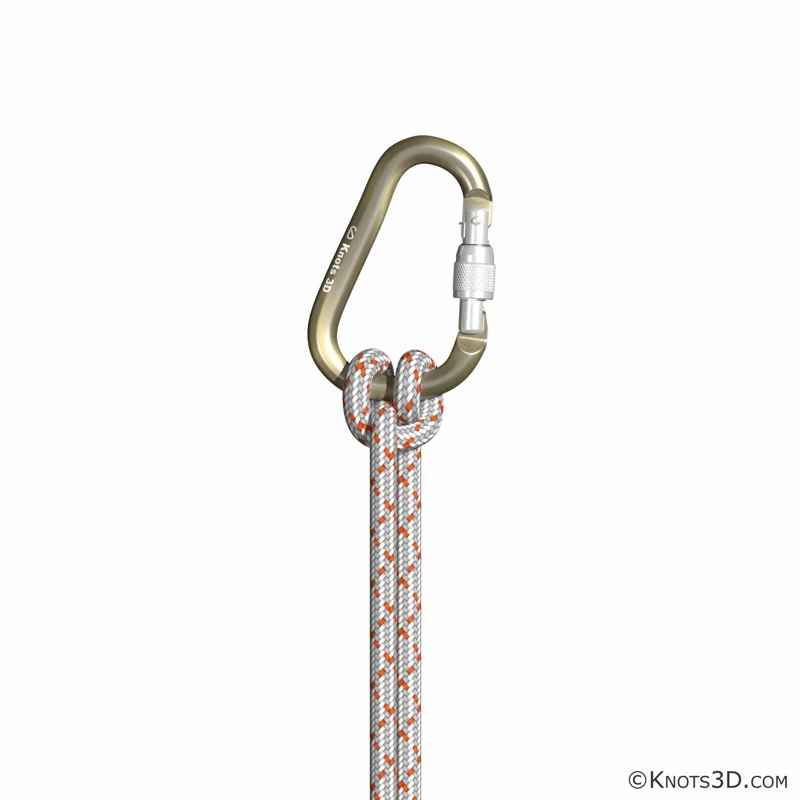
Clove hitch in a carabiner — preview from Knots 3D

Watch the Knots 3D animation ↗

Stance & rope

Clove hitch

In the bight in a locker — standard personal tether at the stance

Use

  • Personal tether at the stance: clove hitch in a locker — length adjusts without opening the system.
  • Join fixed points with the climbing rope (series, swinging leads).

Tips

  • Keep it slightly in tension, or the hitch can walk.
  • Two parallel turns around the carabiner, tails tidy — in the bight, not a messy reweave.

Caution

  • A sloppy clove hitch can slip or capsize under load.
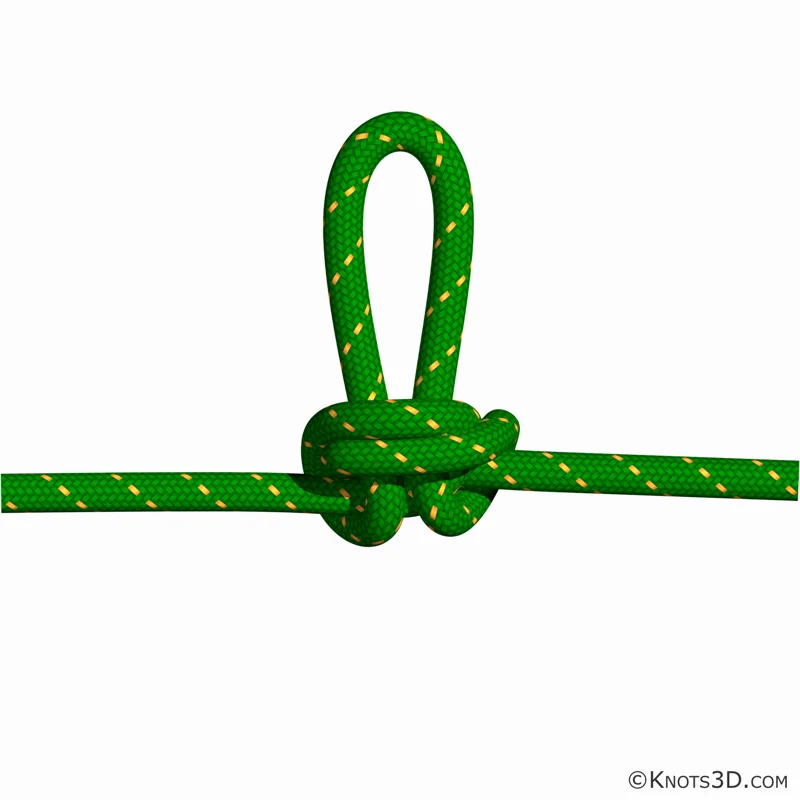
Alpine butterfly — preview from Knots 3D

Watch the Knots 3D animation ↗

Stance & rope

Alpine butterfly

Fixed loop in the middle of the rope — no ends needed

Use

  • A midline loop to clip — third on the rope, glacier travel, a clip-in on the line.
  • Isolate a damaged bit: the bad section sits in the loop and takes no load.
  • Holds load in three directions — both strands and the loop.

Tips

  • Dress it symmetrically — both “wings” even. The hand method works with gloves on.
  • After a load, often easier to untie than an overhand on a bight.

Caution

  • An asymmetrical butterfly can slip or capsize.
  • Do not clip the isolated damage — that loop stays empty.
Girth hitch (lark’s head) — preview from Knots 3D

Watch the Knots 3D animation ↗

Stance & rope

Girth hitch

Sling on a tree, ring or harness — no carabiner

Use

  • Sling around a tree, block or ring — a natural anchor when there is no bolt.
  • Sling onto the harness tie-in or a gear loop.

Tips

  • Dress it flat, no twists. Load both legs equally.
  • On a tree: a thick object, don’t pull the sling over an edge.

Caution

  • Loaded on one strand it can slip — that is a cow hitch, not a girth hitch.
  • Sling-on-sling weakens the material, Dyneema especially. Prefer a carabiner if you have one.
Munter hitch in a carabiner — preview from Knots 3D

Watch the Knots 3D animation ↗

Belay & backup

Munter hitch (HMS)

Belay and lower with only rope and an HMS carabiner

Use

  • Partner belay off the fixed point — DAV standard on alpine pitches when there is no tube at the stance.
  • Lowering and improvised rappel: friction comes from the rope rubbing on itself and the carabiner.

Tips

  • Use a wide HMS locker — two strands must fit. Brake over the solid arm, not the gate.
  • HMS on the strand the climber is on — not the empty one beside it.
  • Pay out parallel to the incoming strand — otherwise it kinks.

Caution

  • It twists the rope and gets hot. The locker must be locked — an open gate under load is critical.
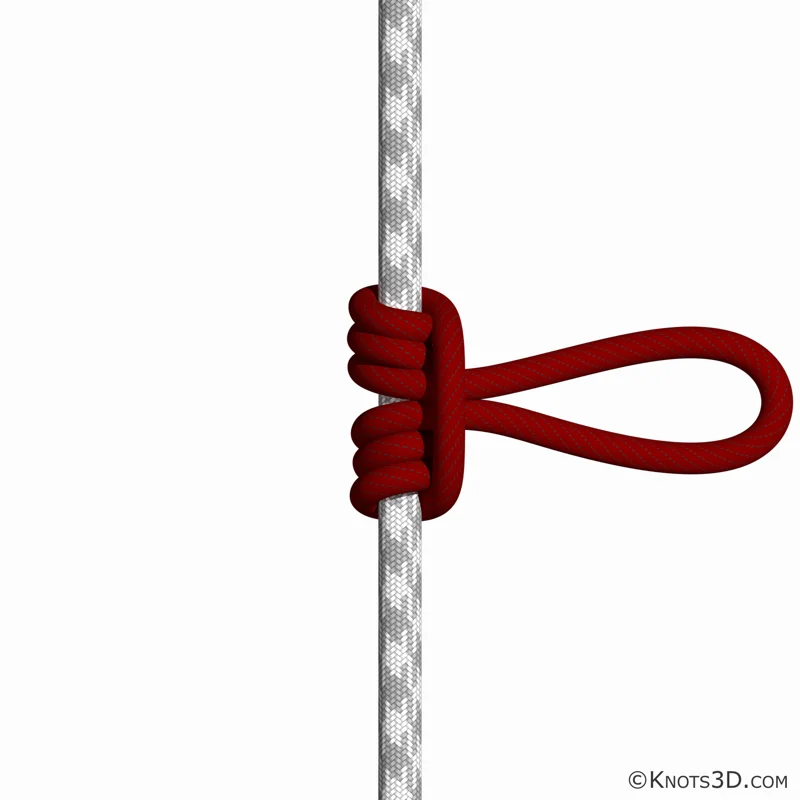
Prusik — preview from Knots 3D

Watch the Knots 3D animation ↗

Stance & rope

Prusik

Cord grip on the rope — self-rescue & progress

Use

  • Self-rescue and progress on a fixed rope (Prusik hitch / rope walking).
  • Classic: backup while rappelling (short Prusik). Not the standard backup for a partner belay at the stance.

Tips

  • Use slightly thinner, preferably soft nylon (PA) cord — pure Dyneema grips poorly.
  • On the packing list: don’t forget a short Prusik (~30 cm).

Caution

  • A Prusik wrapped too loosely will slip under load.
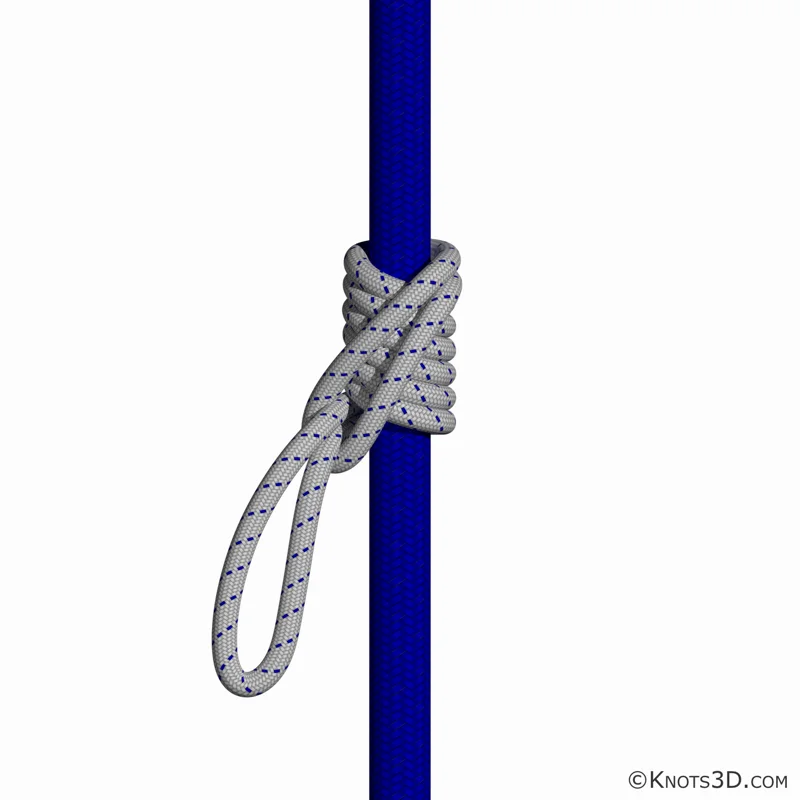
Klemheist — preview from Knots 3D

Watch the Knots 3D animation ↗

Stance & rope

Klemheist

Friction hitch with a sling — bites under load, slides without

Use

  • Ascent and descent on the rope, rappel backup — like a Prusik, but a sewn sling works too.

Tips

  • Watch the direction: it bites only one way. Extra wraps if the rope is slick or icy.
  • Unloaded it slides on the rope — more practical than a locked Prusik.

Caution

  • Tied the wrong way it will slip. Check it cinches before you load it.
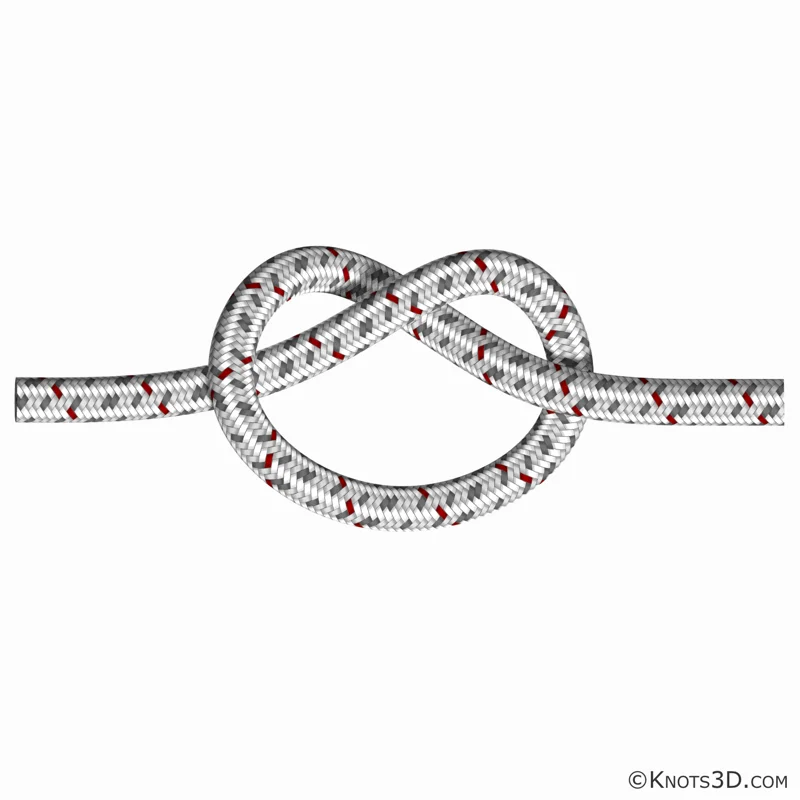
Overhand knot — preview from Knots 3D

Watch the Knots 3D animation ↗

Belay & backup

Overhand knot

Simplest backup knot — stopper and closing slings

Use

  • Backup on the bowline (with Yosemite finish) — optional on the figure-eight, required in some gyms.
  • Close a cord loop (alternative to a double figure-eight).
  • Shorten slings / master point on a trad anchor (overhand).

Tips

  • Snug it against the main knot — a loose backup can snag.
  • Always back up a bowline — on a figure-eight, enough tail is often enough unless the gym says otherwise.

Caution

  • The overhand alone is not a tie-in knot — use it only as a backup or sling knot.
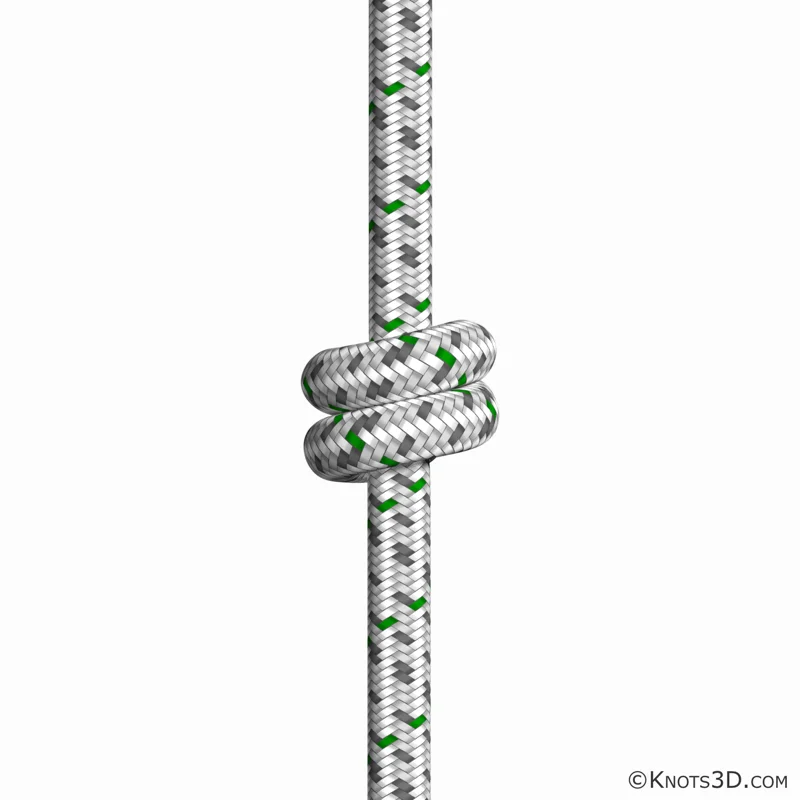
Double overhand — preview from Knots 3D

Watch the Knots 3D animation ↗

Belay & backup

Double overhand

Stopper at the rope end — more secure than a single overhand

Use

  • Stopper at the rope end — e.g. when rappelling, so you do not go off the end.
  • Building block of the double fisherman’s: two opposing double overhands.

Tips

  • Cinch it hard, leave enough tail. Once set, it holds.

Caution

  • Not a join for two ropes — use a double fisherman’s or an overhand on a bight.
Double fisherman’s — preview from Knots 3D

Watch the Knots 3D animation ↗

Belay & backup

Double fisherman’s

Join two cords or ropes — standard for Prusik loops

Use

  • Tie cord into a closed Prusik loop.
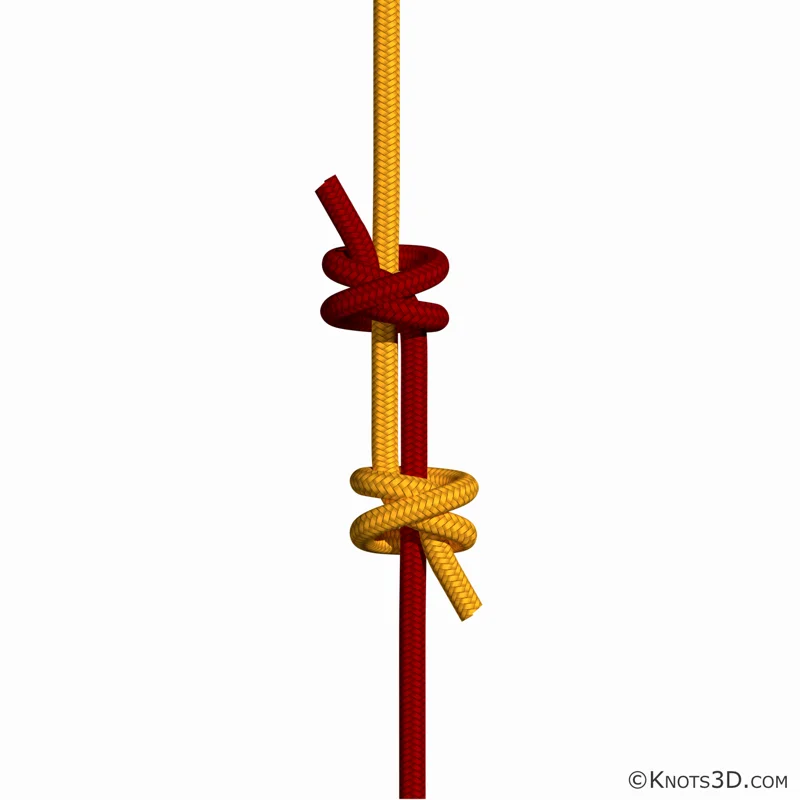
  • Join two ropes of similar diameter — hard to untie after a load.

Tips

  • Cinch both knots together, tails a good hand’s width. The wraps must sit clean.
  • To join two half ropes for a rappel in the Alps, often an overhand — easier to untie, flatter on the rock.

Caution

  • After a heavy load it barely unties. Mismatched diameters hold worse.
Swiss seat — preview from Knots 3D

Watch the Knots 3D animation ↗

Tie-in knots

Swiss seat

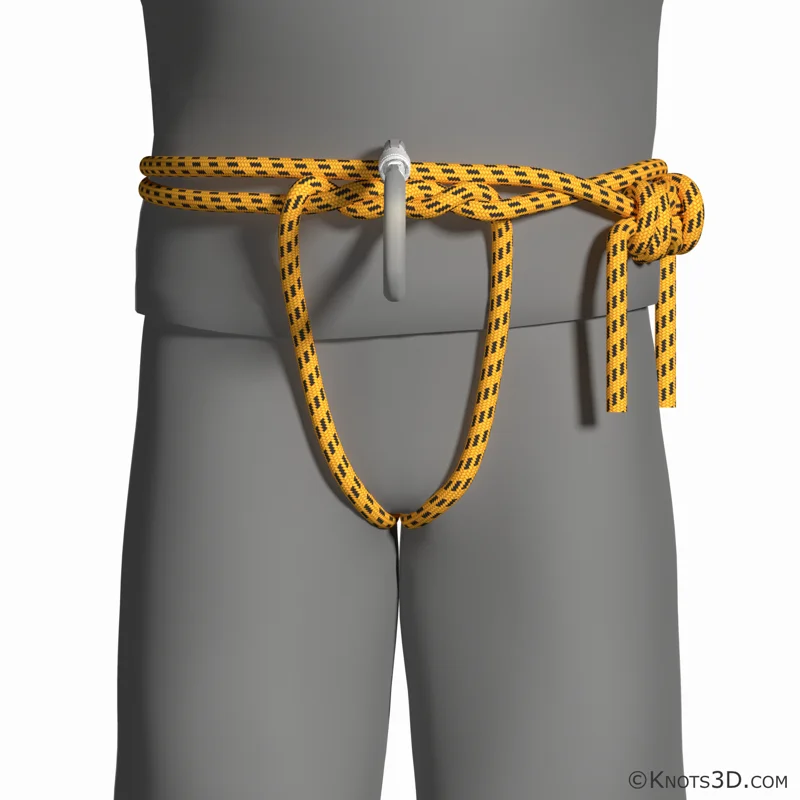
Improvised harness from rope — emergency only

Use

  • Emergency harness when the climbing harness is missing — rappel or a short improvised action.

Tips

  • Wide around hips and thighs, knot in front, snug but not cutting off circulation.

Caution

  • Not a substitute for a climbing harness. It cinches and can numb the legs — emergency only, not for sport climbing.
Alpine coil — preview from Knots 3D

Watch the Knots 3D animation ↗

Rope care

Alpine coil

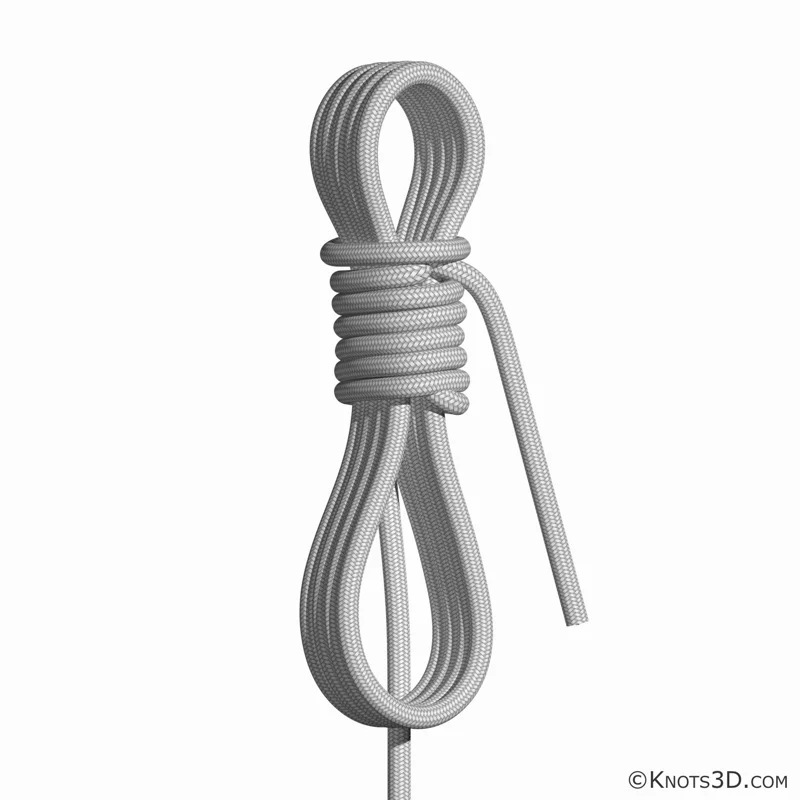
Rope over shoulder and chest — hands free on the approach

Use

  • Carry the climbing rope on the body when the pack is full or the rope should stay ready to hand.

Tips

  • Loops the same length, cinch it tight so the coil does not dump.

Caution

  • Wrapped too loosely it slips while walking — and the rope lands in the scree.
Coiling a rope — preview from Knots 3D

Watch the Knots 3D animation ↗

Rope care

Coiling a rope

A rope coil — tidy, without kinks

Use

  • Store and carry the rope after the outing without it knotting itself.

Tips

  • Lay the loops from the hand, do not twist the rope — or it kinks on the next flake-out.

Caution

  • A twisted coil dumps a kink mess at the stance. Better to coil it again.

Figure-eight or bowline?

  • Figure-eight: worldwide standard, easy to check, often required in gyms — hand-width tail, backup optional.
  • Bowline: easier to untie after a fall, needs Yosemite + overhand, your partner must know it.
  • Both: always rewoven through both harness tie-in points, always with a partner check.

How to practise

  • Watch the Knots 3D animation, then tie it with a rope in your hands.
  • Practise slowly at the harness, talk it through — partner checks along.
  • Repeat regularly — knots fade.

Also important — covered elsewhere

  • Clove hitch and HMS in practice at the stance: length, strand choice, left–right — see belay anchors.
  • Overhand as a rappel join of two half ropes: at the wall, 10–20 cm of slack — see rappelling.

At the stance you often also need Belay anchors & rope management →, when rappelling the join of two half ropes → and on the tour the packing list →

Knot previews © Knots 3D (Nynix LLC) — thumbnails from knots3d.com, animations linked on their site.