Climbing.
Rock · Geology

Rock at the crag

What the wall is — atomic, mineral, and in the hand. So granite, limestone and sandstone are more than names.

In short

  • What you hold is chemistry plus cooling, pressure and water. The minerals and how they link decide friction, cracks, polish, and whether cams or nuts hold.
  • Almost all climbing rock is silicate or carbonate. Silicate building block: the SiO₄ tetrahedron. Limestone building block: the flat CO₃ triangle.
  • Crystalline rock (granite, gneiss, porphyry) often jams more honestly. Limestone is smoother, more pocketed, water-soluble. Sandstone wants to be dry.
Three kinds of rock

Igneous, sedimentary, metamorphic

Every crag falls into one of these three families — or a mix, when the Alps rebuilt the rock again.

Cooled magma

Igneous rocks

Melt cools and crystallises. Plutonic rock (granite, gabbro) cools slowly underground — coarse crystals. Volcanic rock (basalt, porphyry, rhyolite) cools fast at the surface — fine, or with phenocrysts.

Often good friction and cracks. Cam country. Crystals can be sharp or crumbly, depending on weathering.

Deposited rock

Sedimentary rocks

Grains, shells or chemical precipitate are deposited and lithified (diagenesis). Cement: silica, calcite, clay, iron oxides.

Limestone: pockets, solution holes, polish. Sandstone: rounded holds, often off-limits after rain. The cement decides how solid the rock is.

Transformed rock

Metamorphic rocks

Existing rock recrystallises under pressure and heat without melting. Foliation, banding, harder minerals.

Gneiss often climbs like granite, but in layers. Quartzite is extremely hard and high-friction. Mica schist can be slabby and unreliable.

Atomic structure

Two building blocks, the rest is how they link

Silicates (granite, gneiss, sandstone) live off the tetrahedron. Carbonates (limestone, dolomite) off the flat triangle. How the blocks link sets cleavage — and whether a crack holds or a flake blows.

SiO₄ tetrahedronSiOOOO
SiO₄ tetrahedron — silicon (green) in the centre, oxygen (blue) at the four corners. Dashed edges sit at the back.

SiO₄ tetrahedron

SiO₄⁴⁻

Silicon in the centre, four oxygens at the corners — like a pyramid with triangular faces. That is the building block of almost all igneous and metamorphic climbing rock. Tetrahedra share corners (oxygen atoms) and build chains, sheets or full frameworks.

Carbonate triangle

CO₃²⁻

One carbon, three oxygens in a plane. With calcium or magnesium you get calcite (CaCO₃) or dolomite (CaMg(CO₃)₂) — the stuff of limestone and dolomite walls. Flat building blocks, three cleavage planes, soluble in (slightly) acidic water.

What sits in between

K⁺, Na⁺, Ca²⁺, Mg²⁺, Fe²⁺/³⁺, Al³⁺

The tetrahedra alone would be negatively charged. Cations fill the gaps and set hardness, colour and cleavage. Aluminium can replace silicon in the tetrahedron (feldspar). Iron often colours rock dark or rust-red.

How tetrahedra link

Framework silicates

Quartz, feldspar

Each tetrahedron shares all four corners. A 3D net — little to no cleavage, hard. That is why granite holds cams: the crack goes through the rock, not along a mica layer.

Sheet silicates

Mica, clay minerals

Tetrahedra in layers, weak bonds in between. Perfect cleavage — mica peels, clay swells when wet. Clay-cemented sandstone goes soft after rain; gneiss with lots of mica can break in slabs.

Chain & band silicates

Pyroxene, amphibole (hornblende)

Tetrahedra in single or double chains. Typical in dark igneous rock (gabbro, basalt). Two cleavage directions, often dark, elongated crystals.

Constituents

The minerals you hold

Rock is a mix. The individual minerals have formulas, hardness and cleavage — the mix inherits friction and fractures.

Quartz

SiO₂

Framework silicate. Each SiO₄ tetrahedron shares all corners — formula SiO₂, no cleavage, Mohs 7.

Pale, glassy mineral in granite, gneiss, sandstone, quartzite.

Gives friction and hard edges. Cracks in quartz are often bomber. Wet quartz can be slick, but it does not break in slabs.

Feldspar

KAlSi₃O₈ · NaAlSi₃O₈ · CaAl₂Si₂O₈

Framework silicate in which Al replaces some of the Si. Two cleavage planes ~90°. Potassium feldspar (pink), plagioclase (white–grey).

By volume the most common mineral in the Earth’s crust — main constituent of granite and gneiss.

The coarse crystals in granite are often feldspar. It weathers to clay — then holds crumble. Fresh: good edges, a bit less friction than quartz.

Mica

KAl₂(AlSi₃O₁₀)(OH)₂ (Muskovit) · Biotit mit Fe/Mg

Sheet silicate. One perfect cleavage plane — peels into paper-thin flakes.

Muscovite (pale) and biotite (black) in granite and gneiss. Glitters in the sun.

Lots of mica = foliated, slippery, unreliable flakes. Cams in mica-rich layers can blow. Tap it before you trust it.

Calcite

CaCO₃

Carbonate. Planar CO₃ groups, calcium in between. Three cleavage planes (rhombohedron), Mohs 3 — scratchable with a knife, fizzes with acid.

Main mineral of limestone and marble. Cement in some sandstones.

Pockets and solution holes form because water dissolves calcite. Polish on well-climbed holds. Wet limestone is clearly slicker than wet granite.

Dolomite

CaMg(CO₃)₂

Like calcite, but every second calcium is replaced by magnesium. A bit harder and less soluble than pure limestone.

The Dolomites, parts of the Northern Limestone Alps, some of the Jura.

Often yellowish-grey, a bit rougher than pure limestone. Take brittle bands and yellow zones seriously — magnesium changes the weathering, not the basic rule (carbonate).

Olivine & dark minerals

(Mg,Fe)₂SiO₄ · Pyroxen · Amphibol

Isolated tetrahedra (olivine) or chains (pyroxene, hornblende). Iron-rich, dark green to black.

Gabbro, basalt, peridotite — dark, heavy rock.

Basalt can be sharp and positive (columns, edges) or glassy-smooth. Gabbro climbs coarse-crystalline like dark granite.
At the crag

Climbing rocks you will meet

Composition, fabric, climbing feel and how you protect it. For the main rocks, a massif to place them — plus close-ups so crystals, grains and banding are visible.

Swisstopo

Lithology 500 — Switzerland

Swisstopo map with the Lithology 500 layer: main rock types of Switzerland at a glance. Geology theme, grey national map.

Map
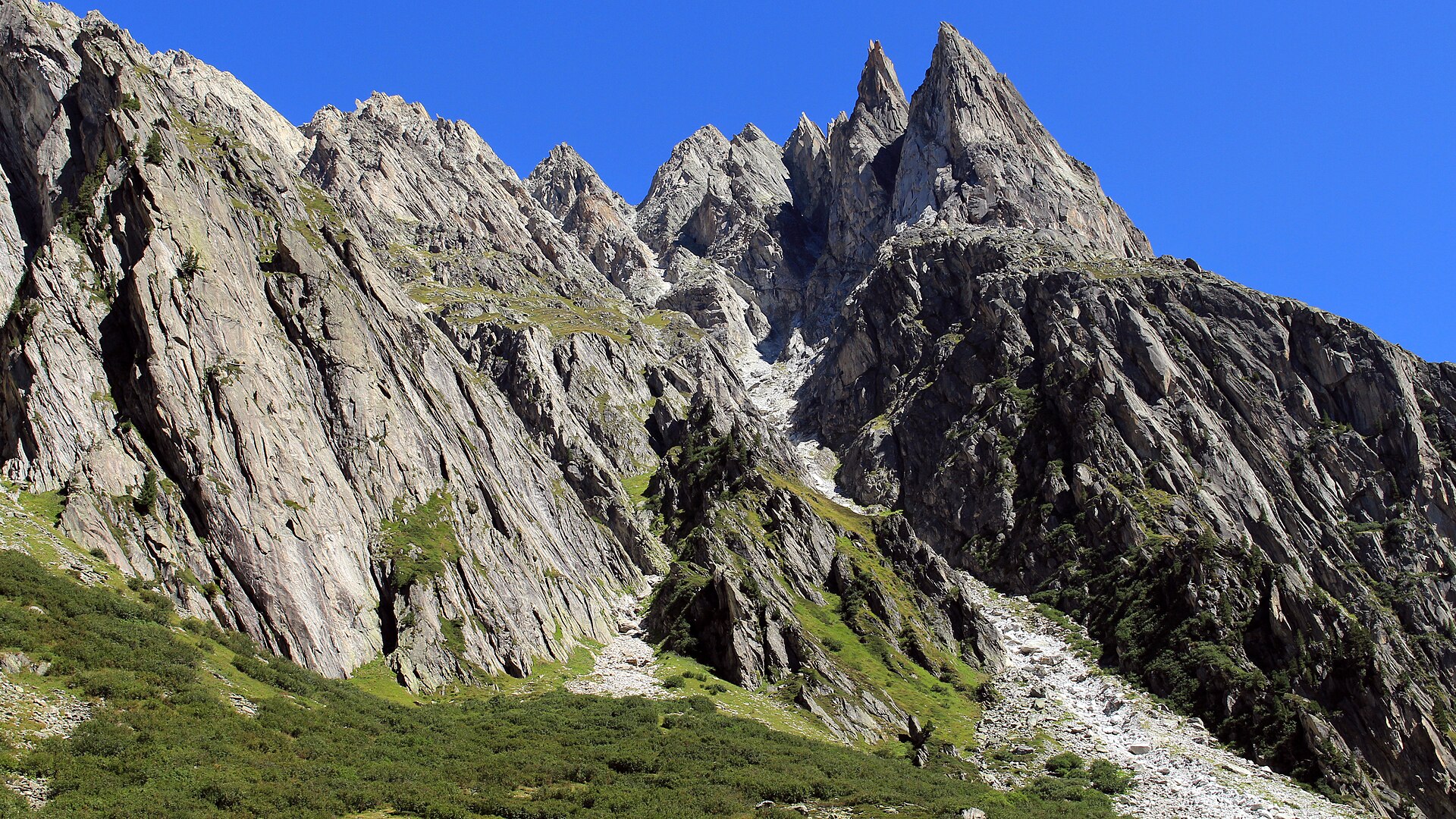
Salbitschijen needle ridge of pale granite, Canton Uri
Salbitschijen, Uri — granite needles and crack systems. Photo: Uwelino, CC BY-SA 4.0
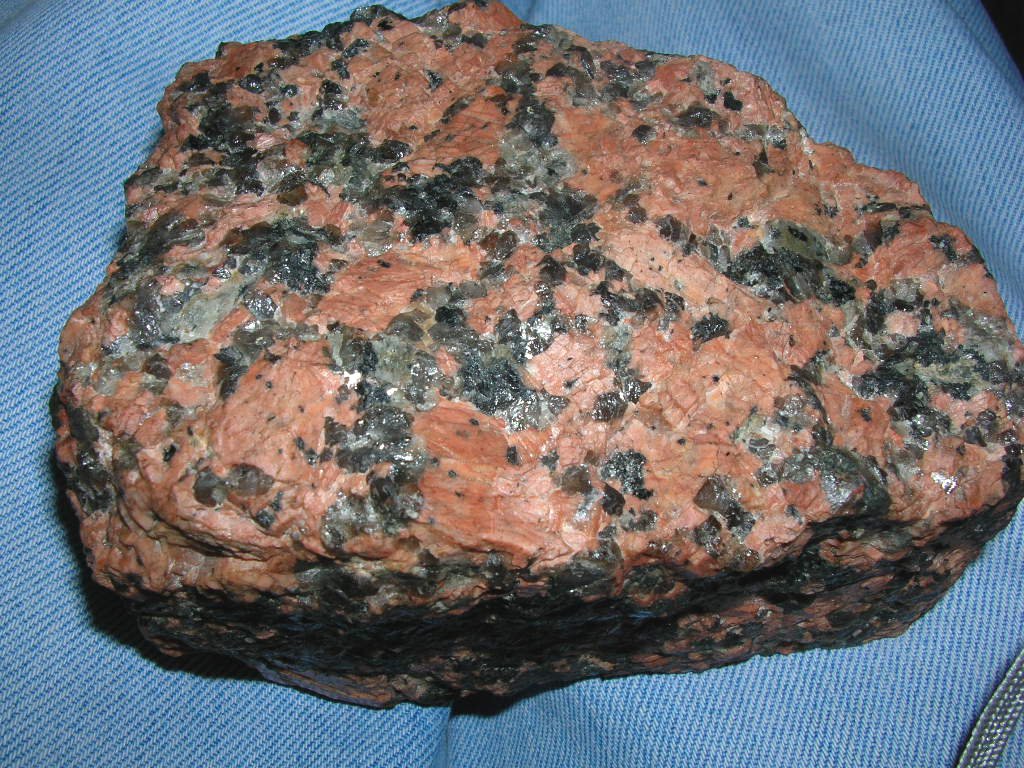
Hand sample of alkali-feldspar granite: pink potassium feldspar, glassy quartz, black biotite
Coarse-grained: pink potassium feldspar, quartz, biotite. Photo: Khruner, CC BY-SA 4.0

Granite

Igneous
Composition
Quartz + feldspar + mica. Typically ~20–40 % quartz, the rest feldspar, a little biotite/muscovite.
Fabric
Plutonic rock, coarse crystals (visible). Equigranular, no bedding. Cracks from cooling and tectonics.
Climbing
Friction, crystals, cracks, often runouts on slabs. Very grippy dry, still okay wet.
Protection
Mostly cams in parallel cracks. Nuts in constrictions. Practice ground for trad.

Examples: Furkapass, Grimsel, Yosemite; Elbsandstein is *not* granite — Saxon Switzerland is sandstone.

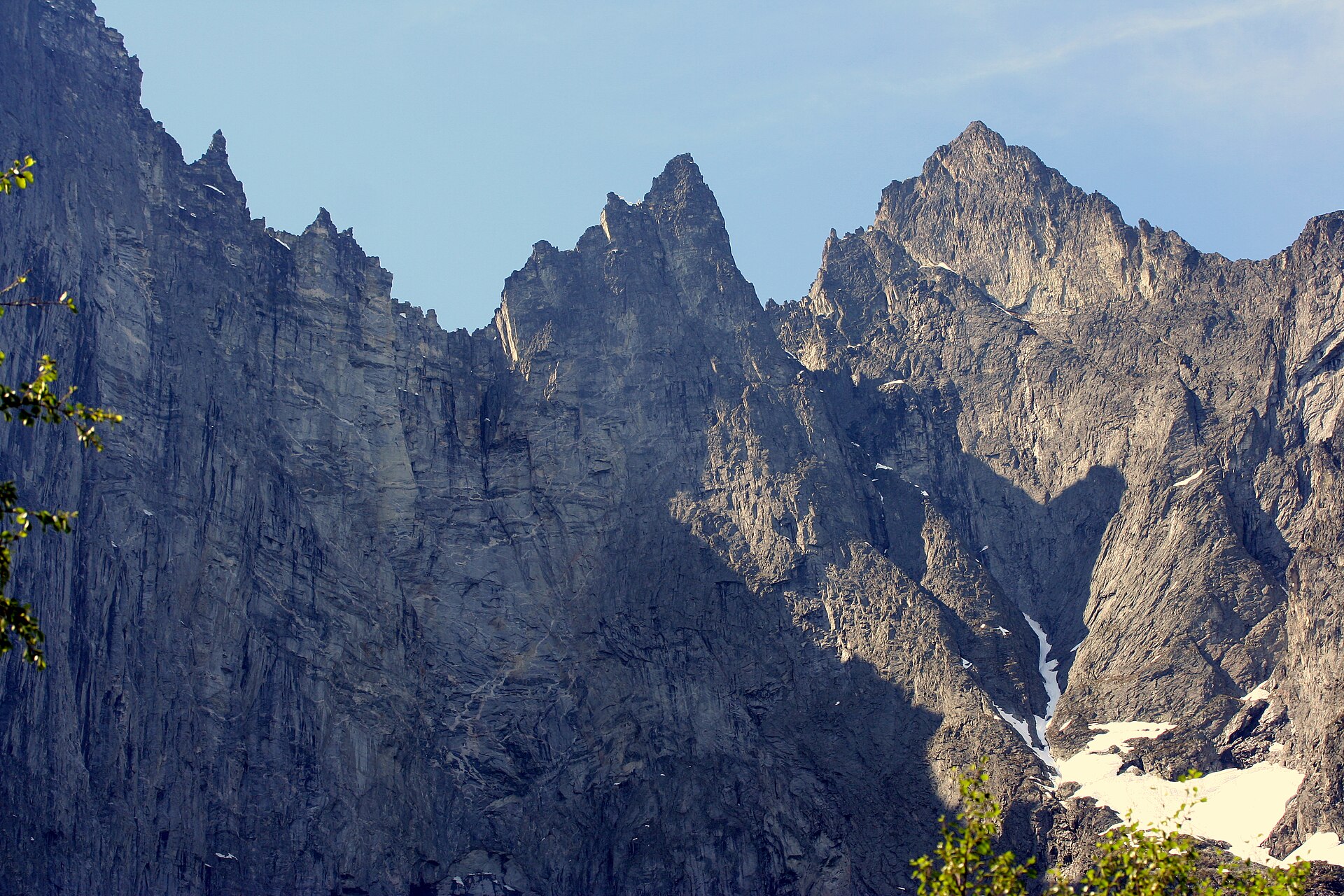
Trollveggen in Norway, a steep gneiss wall with sharp ridges
Trollveggen, Norway — big wall on gneiss. Photo: per, CC BY 2.0
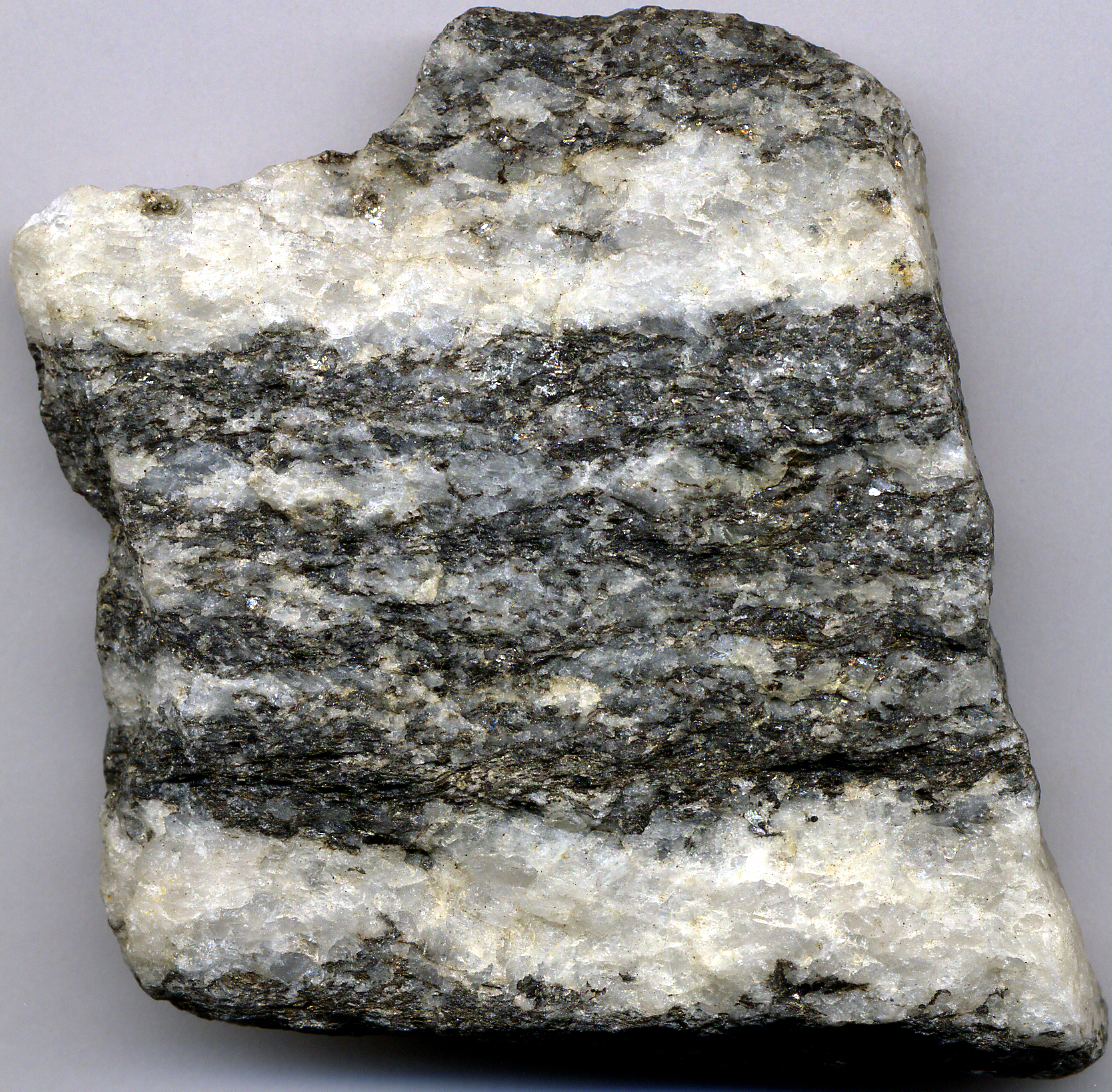
Gneiss hand sample with pale quartz-feldspar banding and dark mica layers
Pale and dark layers — the banding. Photo: James St. John, CC BY 2.0

Gneiss

Metamorphic
Composition
Like granite (quartz, feldspar, mica), but banded by pressure.
Fabric
Alternating pale (quartz/feldspar) and dark (mica) layers. Foliation possible.
Climbing
Often granite-like, plus rails along the banding. Mica layers can flake.
Protection
Cams and nuts as in granite — watch the layer direction. Do not cam into mica bands.

Examples: Aar massif, Ticino, Murgtal / crystalline rock in the Black Forest, parts of the Central Alps.

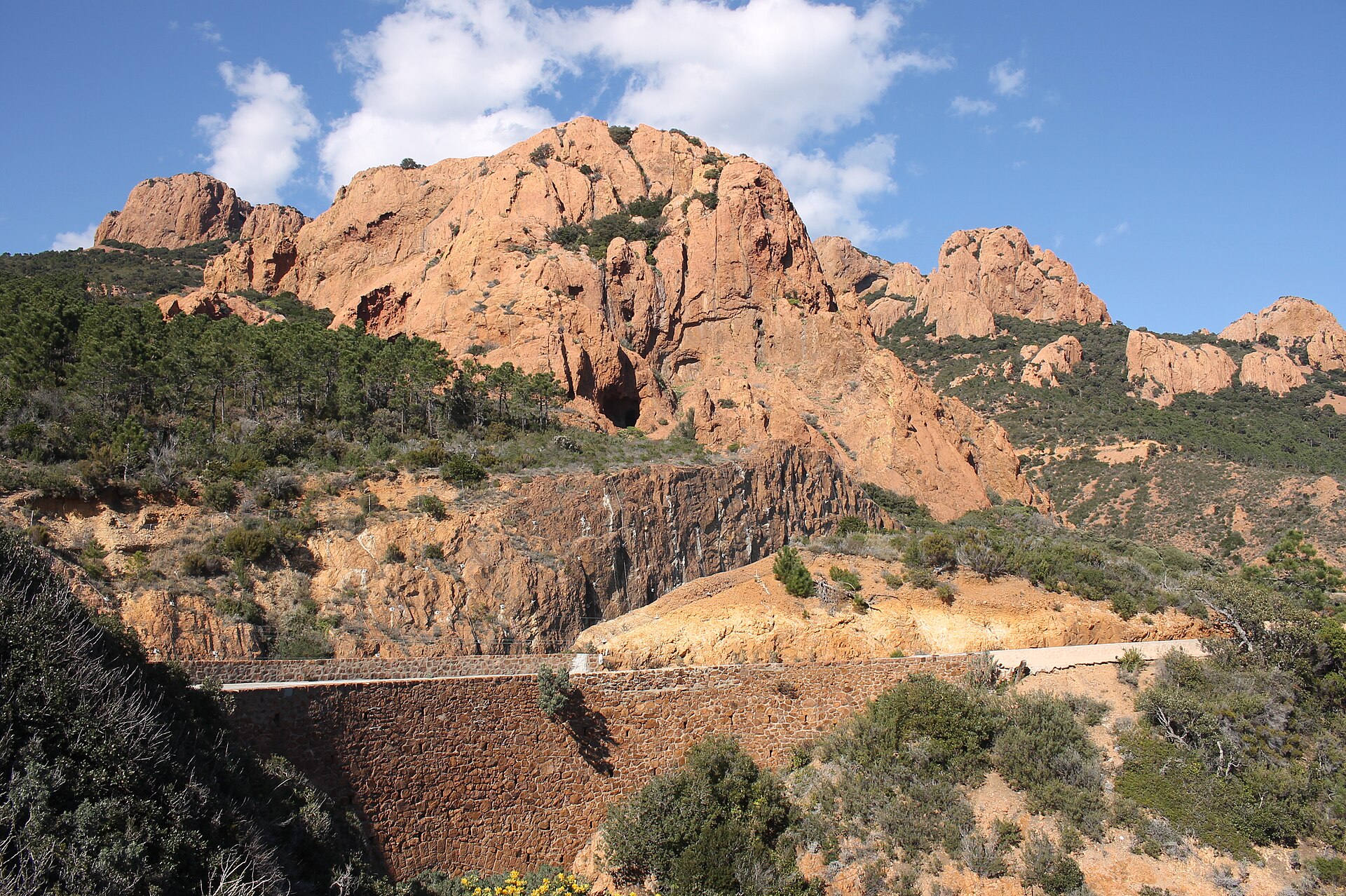
Red porphyry cliffs in the Massif de l’Estérel on the Côte d’Azur
Estérel, southern France — red volcanic porphyry. Photo: Einaz80, CC BY-SA 4.0
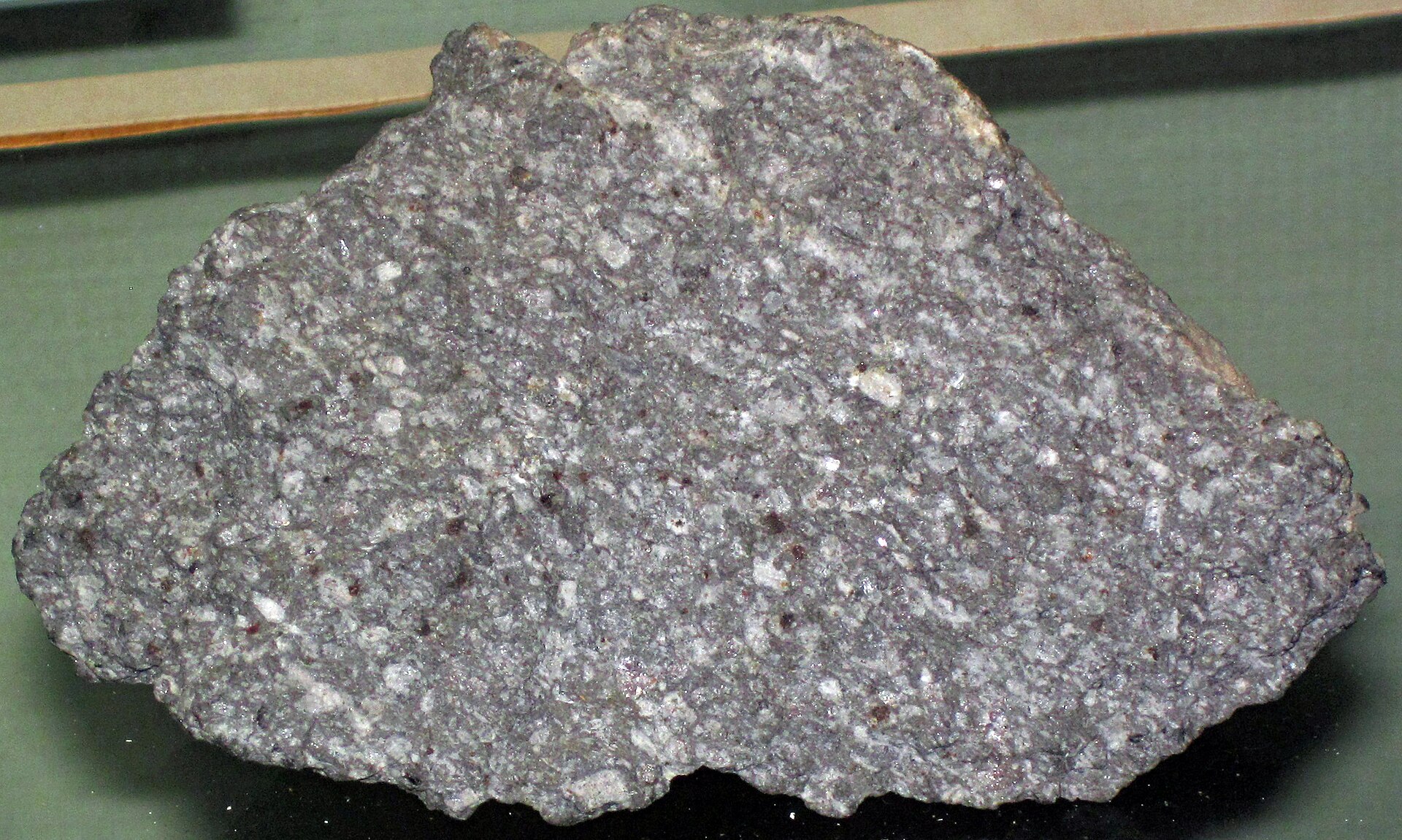
Porphyritic rhyolite hand sample: pale feldspar phenocrysts in a fine grey-violet groundmass
Two grain sizes: phenocrysts in a fine matrix. Photo: James St. John, CC BY 2.0

Porphyry

Igneous
Composition
Chemically often like granite or andesite: large phenocrysts (feldspar, quartz) in a fine groundmass.
Fabric
Volcanic rock. Two grain sizes — large crystals in a dense matrix. Sometimes columnar or slabby jointed.
Climbing
Angular, often steep, small footholds. The phenocrysts are the holds.
Protection
Joints for nuts and small cams. The groundmass can be splintery.

Examples: Bolzano / South Tyrol (quartz porphyry), Estérel (red rhyolite porphyry), some of the Black Forest, parts of the Vosges.

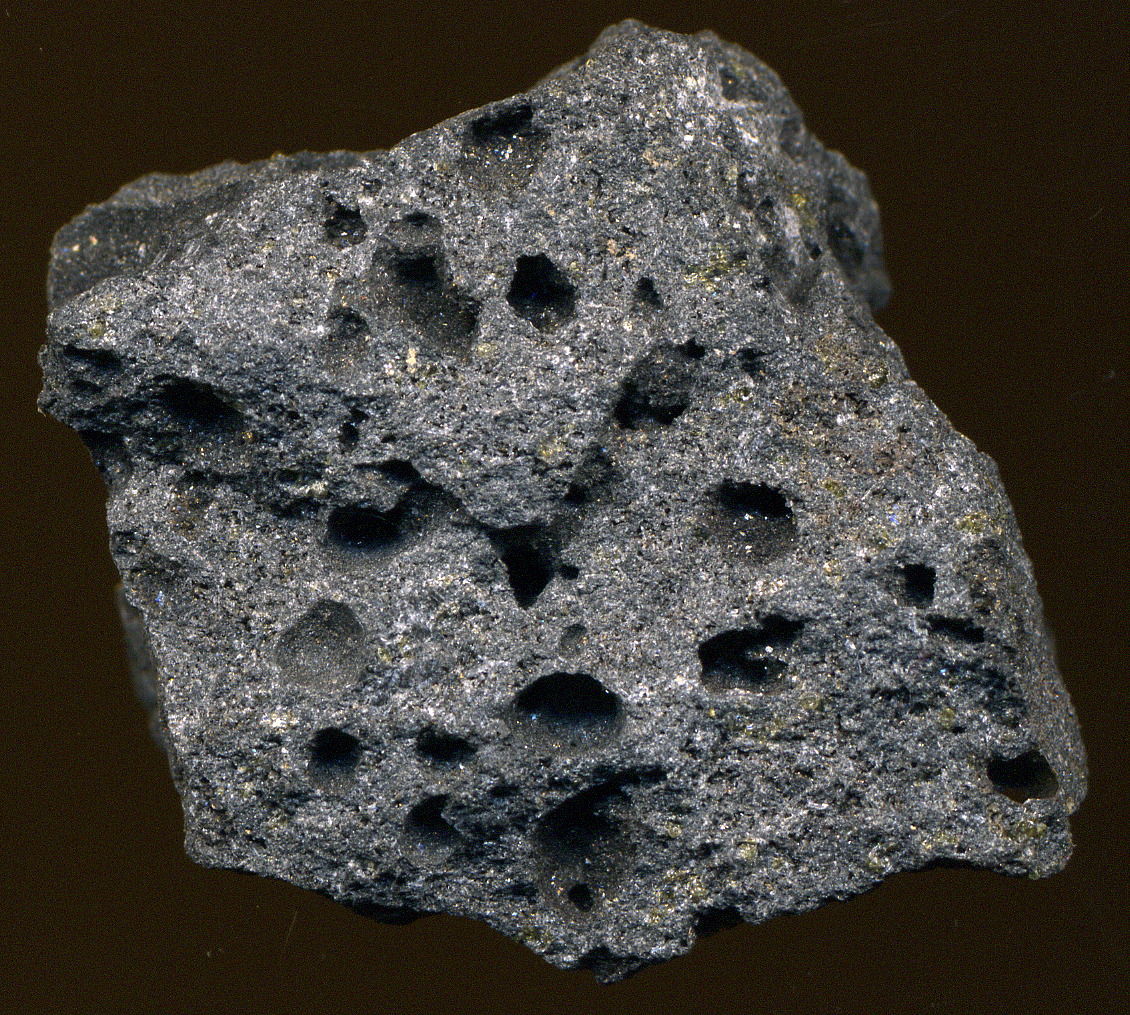
Vesicular basalt: fine dark matrix with round gas bubbles
Fine-grained, with bubbles from solidified lava. Photo: James St. John, CC BY 2.0

Basalt

Igneous
Composition
Plagioclase + pyroxene ± olivine. Little to no quartz — dark, heavy, poorer in SiO₂ than granite.
Fabric
Fine-grained, often columnar jointing (cooling). Sometimes vesicles (amygdales) with calcite or zeolite.
Climbing
Sharp edges, small holds, sometimes very steep. Columns give cracks and edges.
Protection
Cracks between columns, small nuts. Do not cam out vesicles if the crust is thin.

Examples: Eifel, Northern Ireland (Giant’s Causeway as an extreme), some Inn valley porphyry/basalt, Iceland.

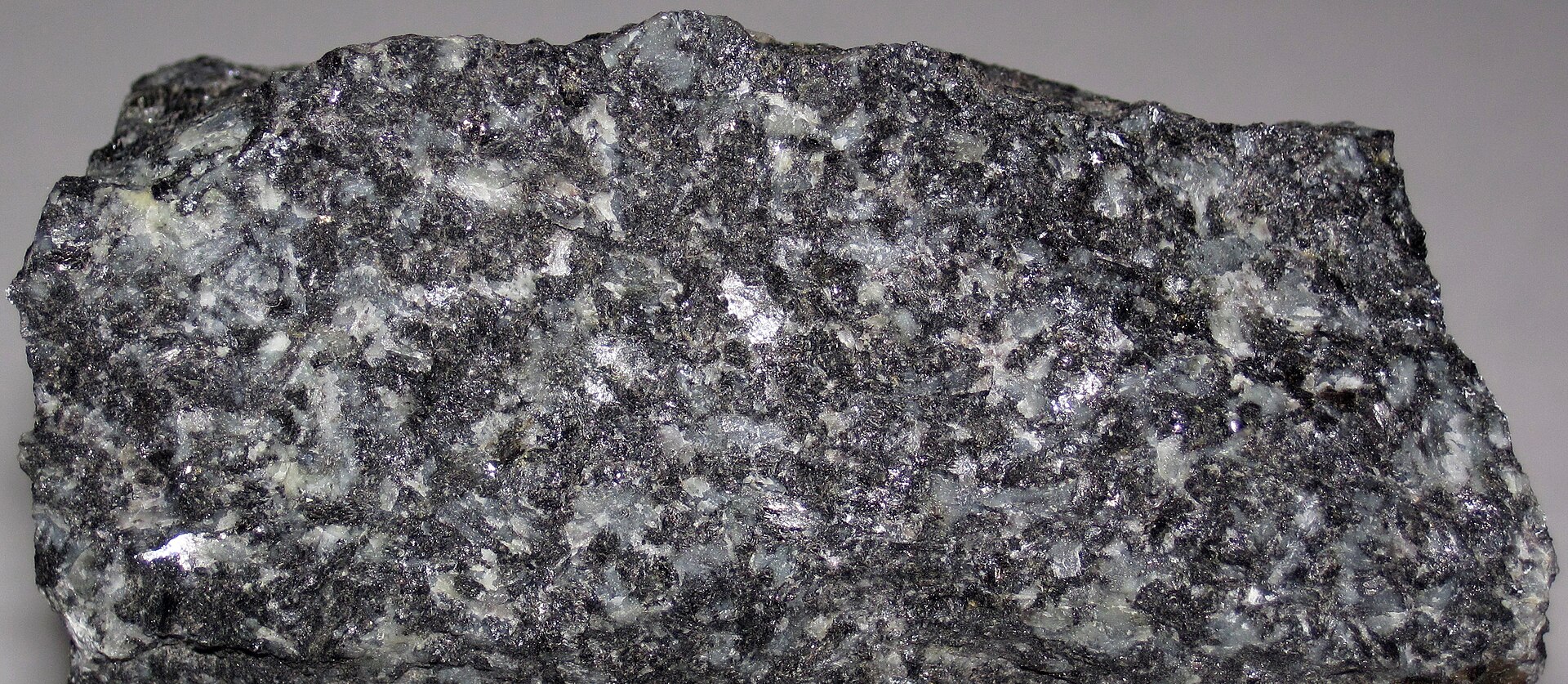
Hornblende gabbro: coarse dark and pale crystals in a salt-and-pepper fabric
Coarse-grained, dark — crystals visible to the naked eye. Photo: James St. John, CC BY 2.0

Gabbro

Igneous
Composition
Like basalt, but plutonic: coarse plagioclase + pyroxene ± olivine.
Fabric
Coarse-grained, dark. The plutonic counterpart of basalt.
Climbing
Coarse, crystalline, often high friction. Less “classic” than granite, similar in logic.
Protection
Cracks and constrictions — cams and nuts. Check solidity depending on weathering.

Examples: Rare as a sport crag, scattered in ophiolite zones (e.g. parts of the Western Alps).

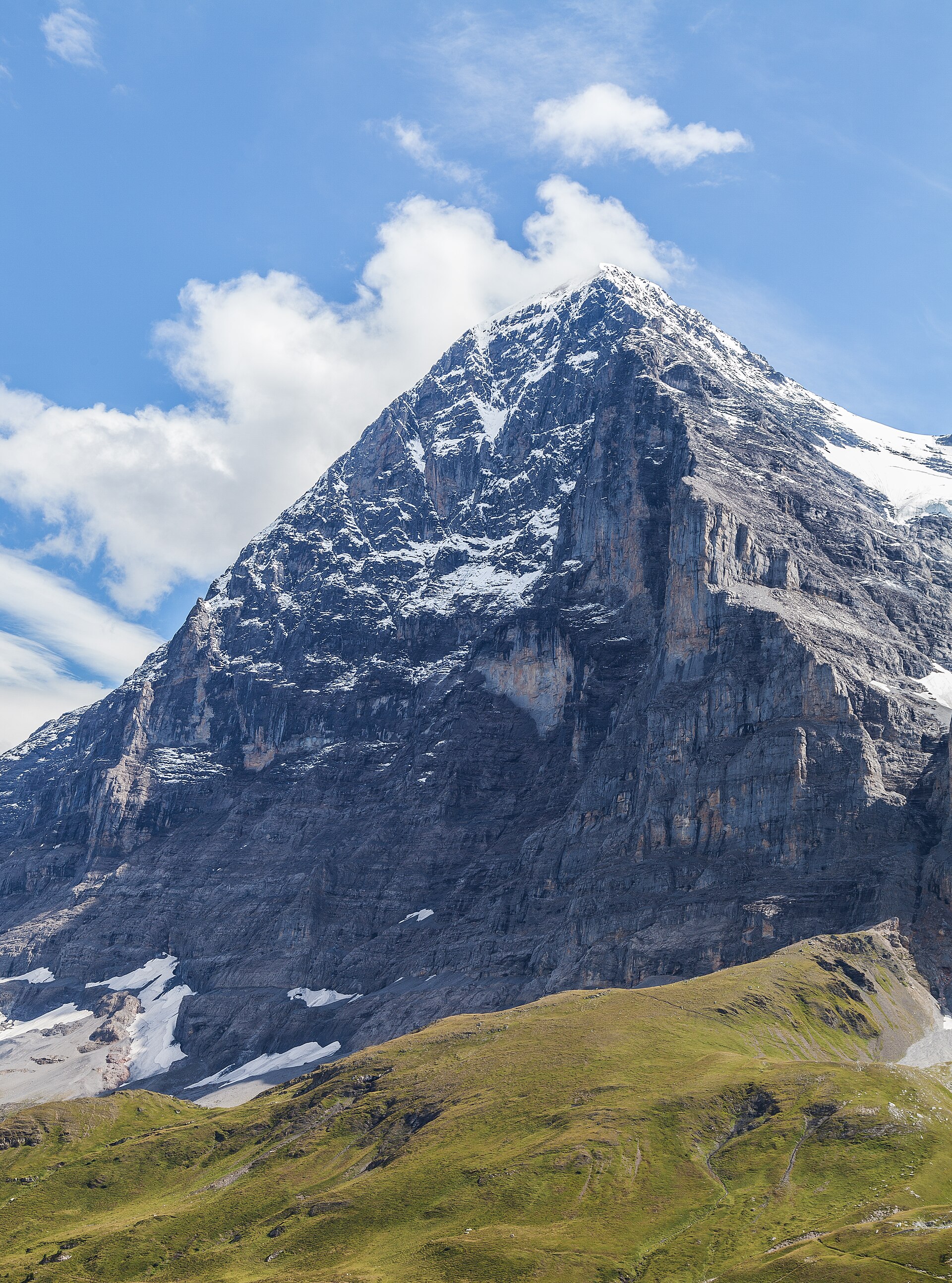
Eiger north face of limestone above the meadows of Grindelwald
Eiger north face, Bernese Oberland — limestone massif. Photo: Fischer.H, CC BY-SA 4.0
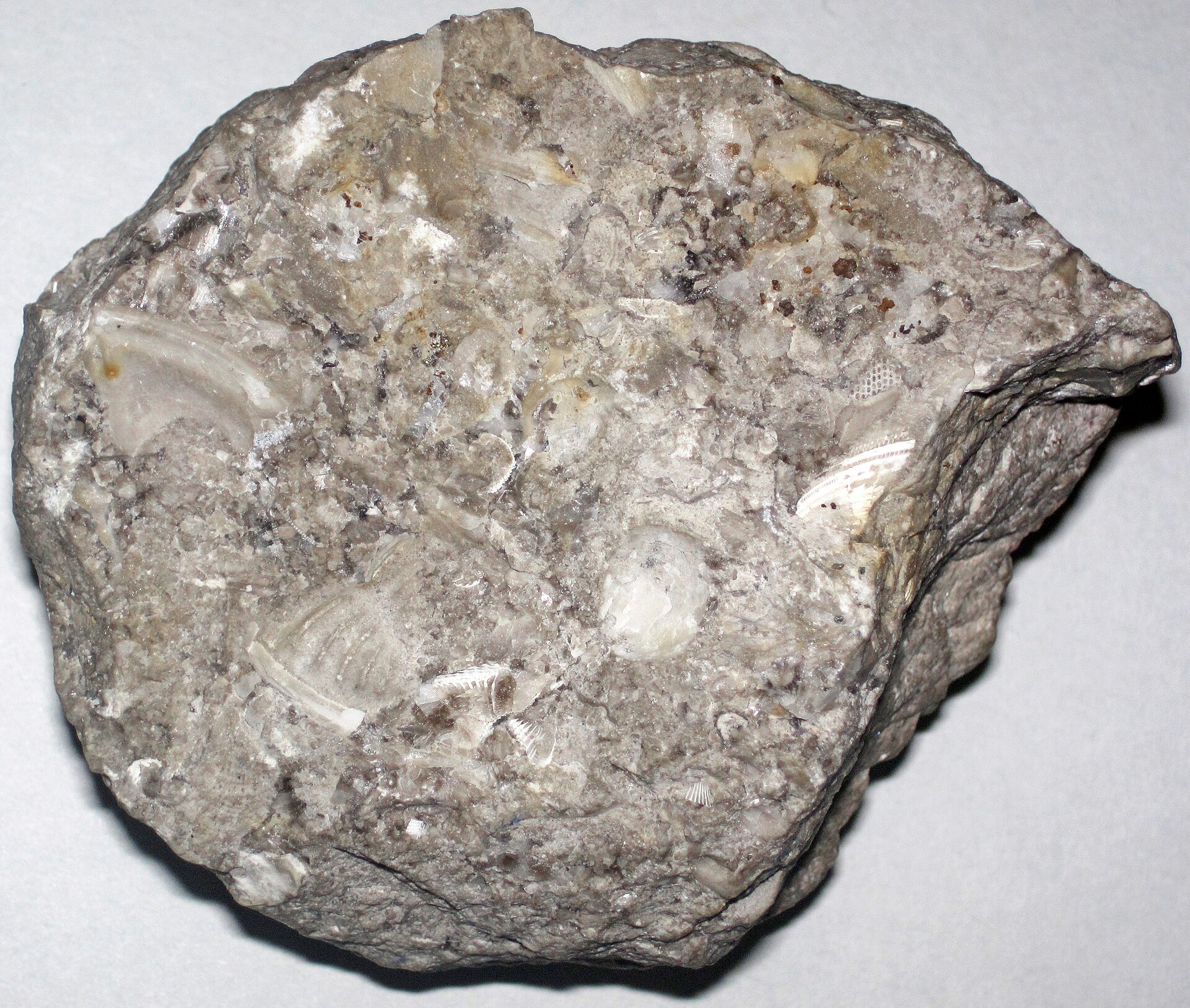
Fossiliferous limestone with shell fragments in a grey calcite matrix
Shells and fragments in the limestone matrix. Photo: James St. John, CC BY 2.0

Limestone

Sedimentary
Composition
Mostly calcite (CaCO₃). Often fossil remains. Impurities: clay, dolomite, silica.
Fabric
Chemically or biologically deposited, later lithified. Joints, karst, solution holes. No silicate frameworks.
Climbing
Pockets, rails, solution holes, polish. Clearly slicker when wet. Finger-friendly when not polished.
Protection
Bolts are the standard. Mobile: more nuts and tricams in pockets than cams in parallel cracks.

Examples: Jura, Danube valley, Rätikon, Dolomites (often dolomite), Calanques, Verdon, Frankenjura.

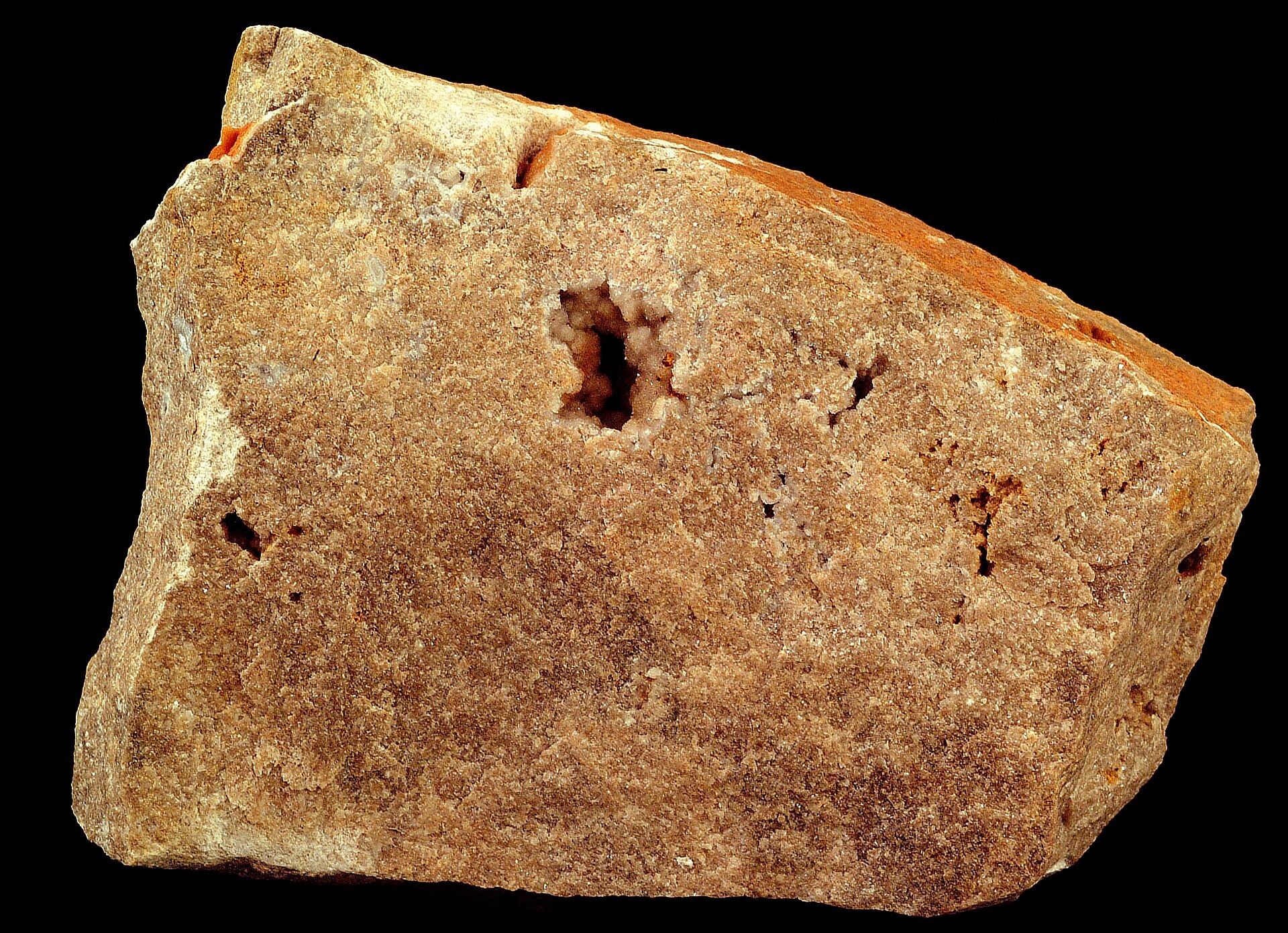
Dolomite rock with sugary crystal texture and a crystal-lined cavity
Sugary, porous — vugs with crystals. Photo: Nessa Eull, CC0

Dolomite rock

Sedimentary
Composition
Dolomite CaMg(CO₃)₂, often mixed with calcite.
Fabric
Like limestone, a bit more resistant to solution. Often yellowish bands, brittle intercalations.
Climbing
Rougher than pure limestone, often more alpine, more exposed. Yellow zones = caution.
Protection
Like limestone, plus more loose rock. Look for stance and gear in solid, grey rock.

Examples: The Dolomites, parts of the Northern Limestone Alps, some of the Swiss Jura.

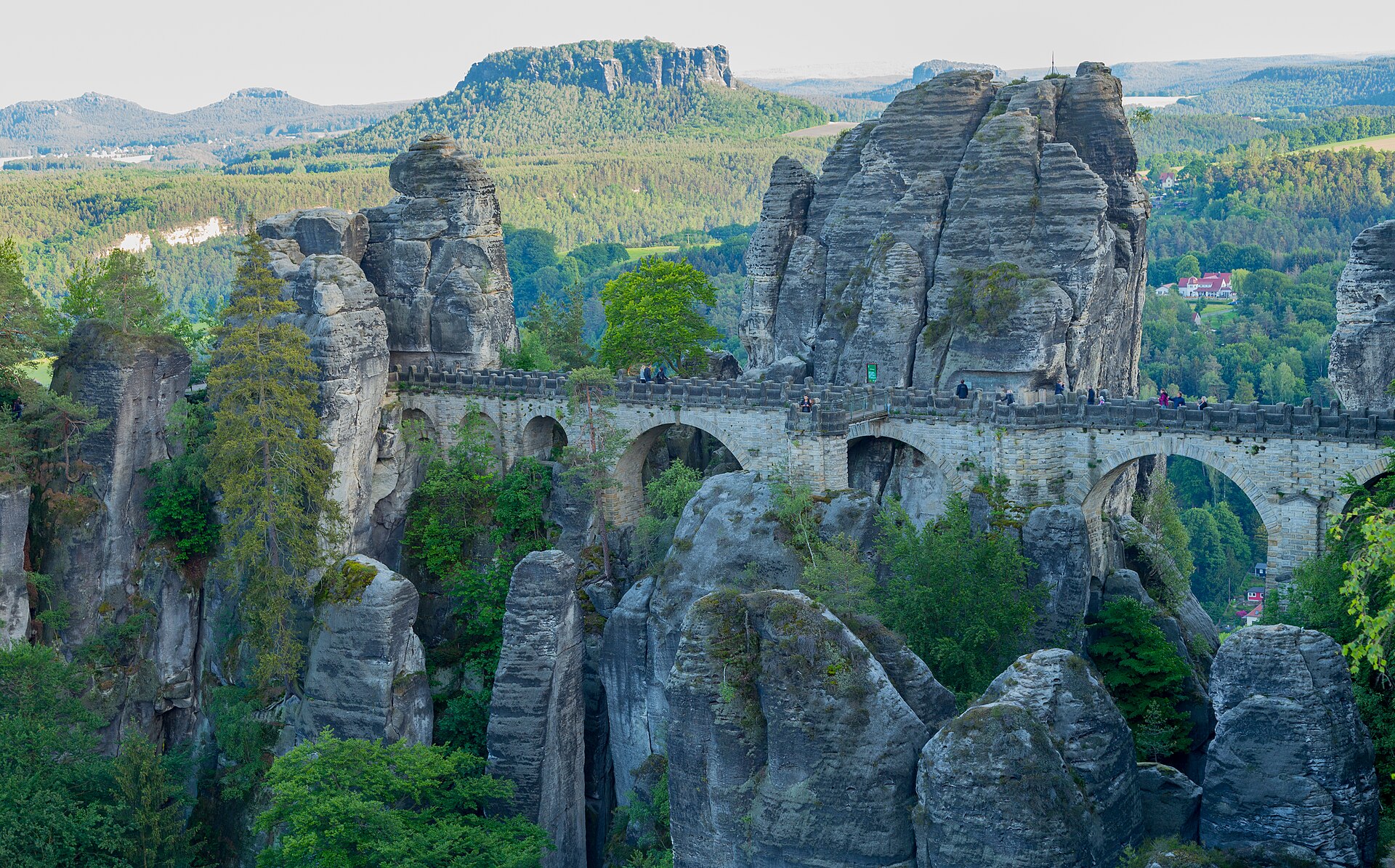
Bastei bridge between sandstone towers in Saxon Switzerland
Bastei, Saxon Switzerland — Elbsandstein towers. Photo: J.-H. Janßen, CC BY-SA 4.0
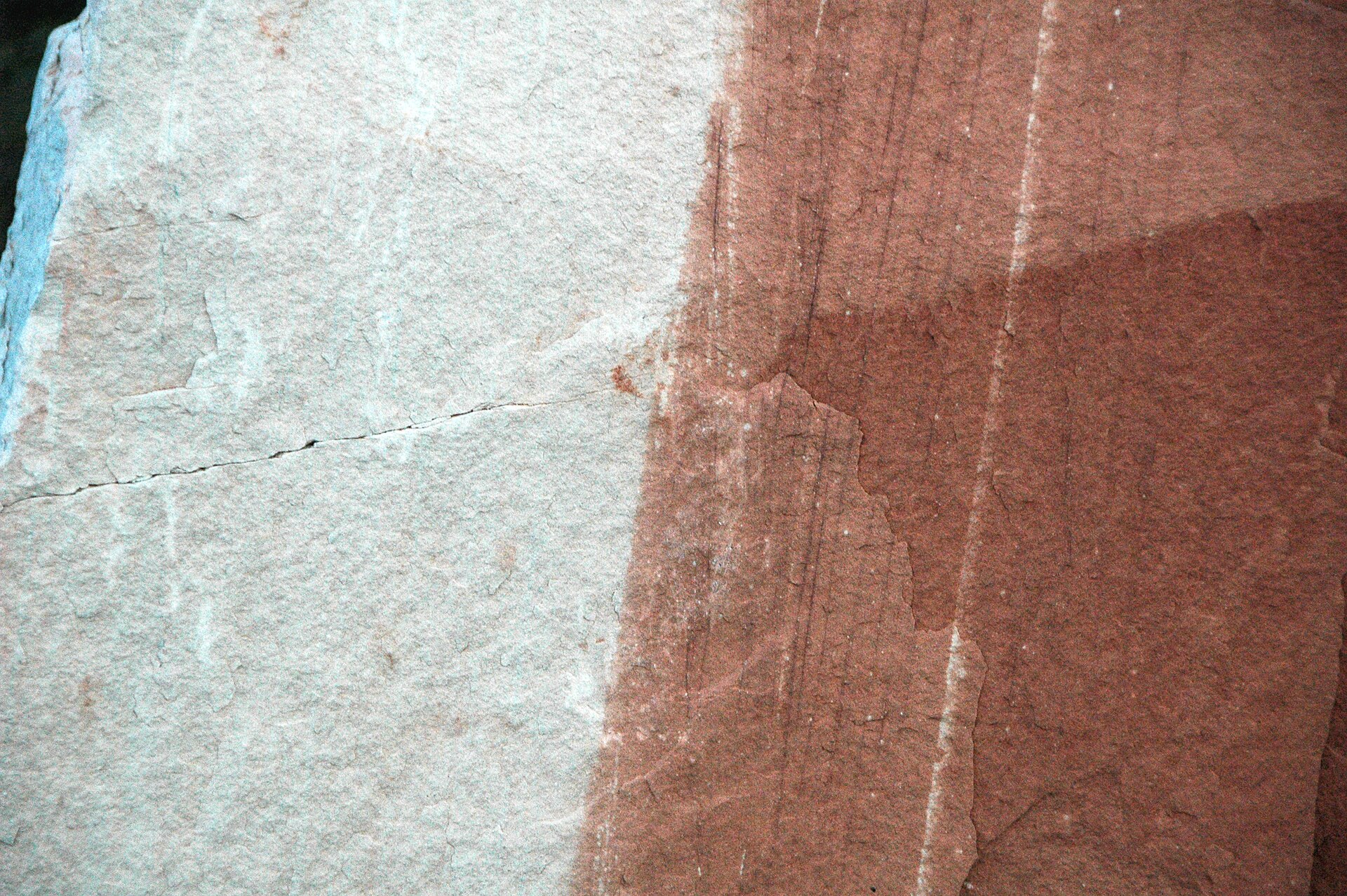
Close-up of sandstone: fine quartz grains, pale on the left, iron-oxide red on the right
Sand grains — iron oxide colours them red. Photo: James St. John, CC BY 2.0

Sandstone

Sedimentary
Composition
Quartz grains (SiO₂) plus cement: silica (hard), calcite or clay (soft, water-sensitive).
Fabric
Deposited sand, bedded. Strength = the cement, not the grains.
Climbing
Round holes, friction, often soft on the edges. After rain wait 48–72 h (esp. Elbsandstein).
Protection
Its own ethic in some areas (rings, knotted slings, no cams that blow the rock). Do not overcam.

Examples: Saxon Switzerland, Pfalz, Fontainebleau (sandstone boulders); Indian Creek is *not* classic sandstone sport — crack trad in sandstone.

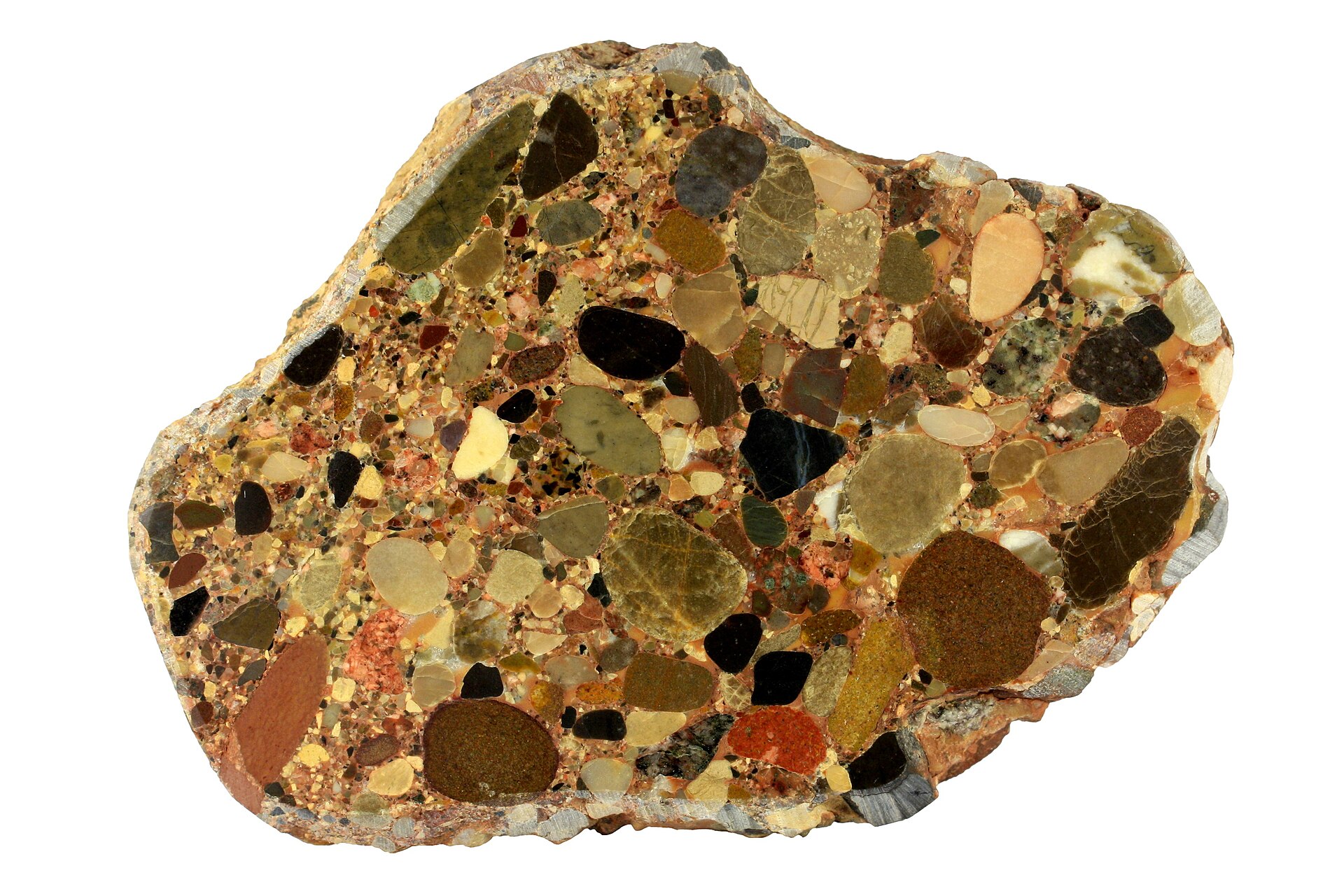
Polished conglomerate slab: colourful rounded pebbles in a sandy matrix, 9 cm
Pebbles in the matrix — slab, 9 cm. Photo: Siim Sepp, CC BY-SA 3.0

Conglomerate

Sedimentary
Composition
Pebbles (cobbles) in a finer matrix. The clasts are often quartz or limestone.
Fabric
Coarse sedimentary fabric. The matrix holds the pebbles — or it doesn’t.
Climbing
Pebbles as holds when they are solid. Exploding “marbles” when the matrix is soft.
Protection
Hard to judge. Sling only solidly embedded blocks. No cams behind loose pebbles.

Examples: Meteora, some Alpine molasses rock, scattered in the Jura.

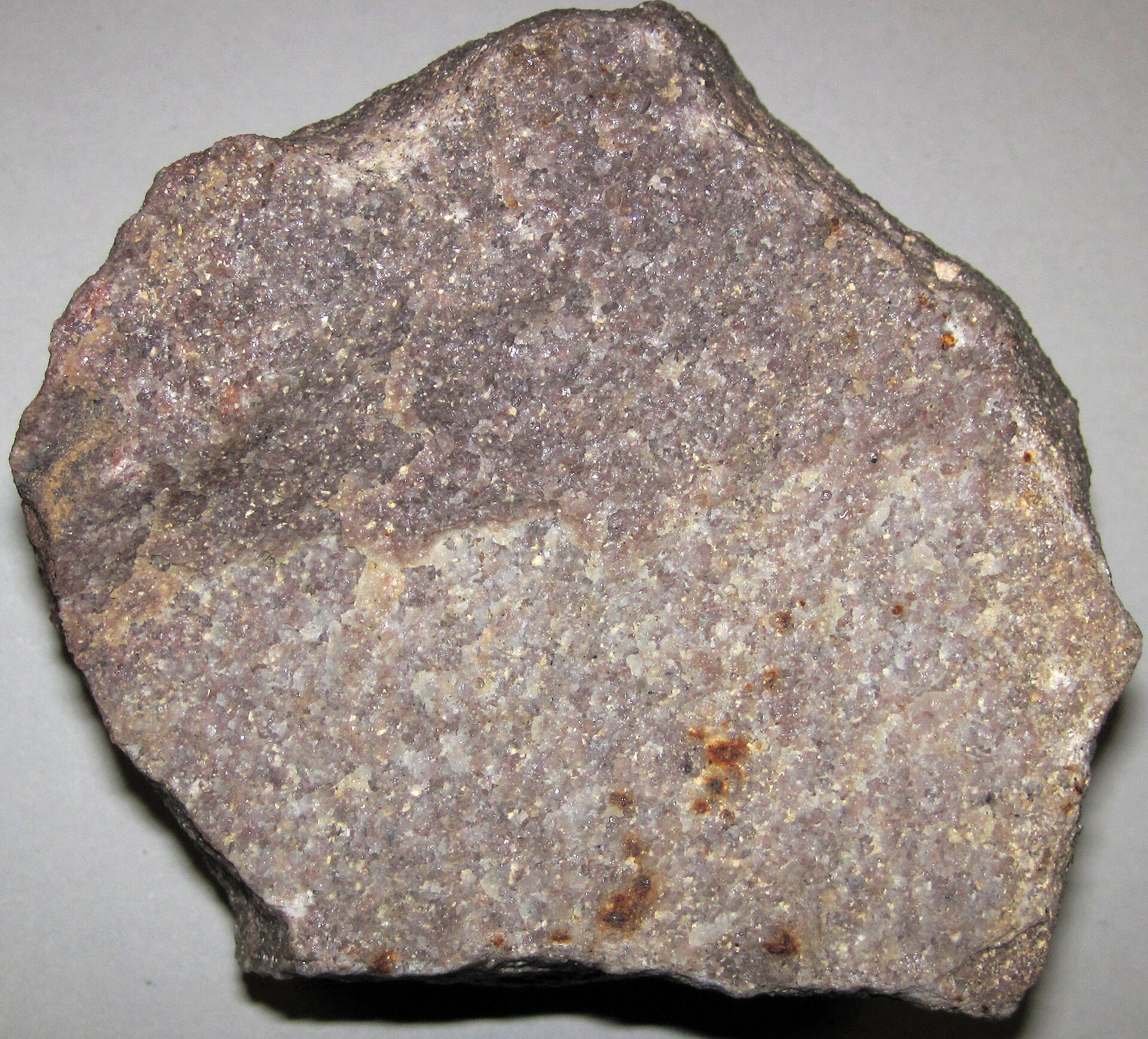
Quartzite hand sample with a sugary, intergrown quartz texture
Sugary — quartz grains welded together. Photo: James St. John, CC BY 2.0

Quartzite

Metamorphic
Composition
Almost pure quartz (SiO₂) — metamorphosed sandstone, grains welded together.
Fabric
Very hard, often sugary or massive. Little cleavage.
Climbing
Extreme friction, small footholds, often slabby and runout. Unforgiving on the skin.
Protection
Few cracks — often bolts or long runouts. Nuts in thin cracks, if they exist.

Examples: Parts of the Western Alps, Scandinavia, some Appalachian quartzite (USA).

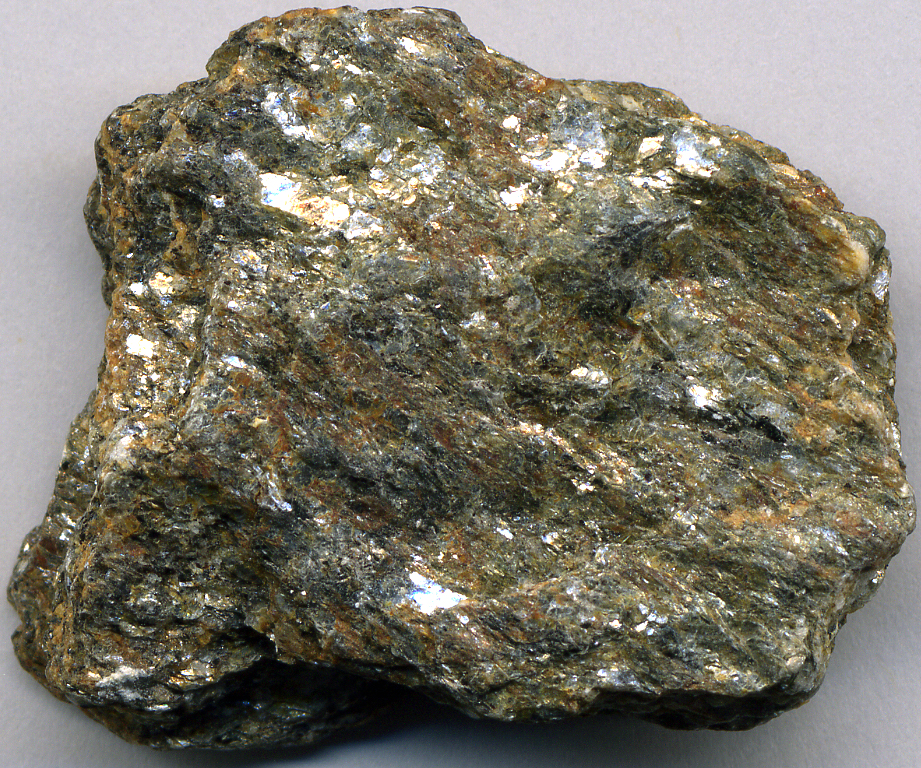
Muscovite mica schist: silvery mica flakes along the foliation
Mica shines — the rock splits in layers. Photo: James St. John, CC BY 2.0

Schist / mica schist

Metamorphic
Composition
Clay minerals, mica, quartz. Fine-layered.
Fabric
Strong foliation. Slabby, often wet and brittle.
Climbing
Rarely good sport climbing. Mixed alpine routes, brittle bands.
Protection
Unreliable. Sling solid bands, do not cam into the foliation.

Examples: Bündnerschiefer, parts of the Eastern Alps — more alpine than crag.

Practice

What to take to the crag

Tap it

One hand on the block, tap with the other. Vibration = not solid. Applies to all rock, especially limestone bands and gneiss layers.

Wet

Limestone and sandstone lose clearly more friction than granite. Clay-cemented sandstone can soak and go soft.

Polish

Calcite (Mohs 3) polishes smooth on well-climbed routes. Quartz (Mohs 7) stays rougher — that is why a 6a in the Jura feels different from a 6a at the Furkapass.

Crack shape follows the rock

Granite/gneiss: cooling joints, often parallel → cams. Limestone: solution and bedding planes, often V and pockets → nuts and tricams.

Cams vs. nuts by rock type: Trad protection → · Practice crags under Tour planning →

Simplified geology for climbing — local variants and weathering on site count more than the textbook formula.